Tar
What's left behind when the smoke is gone.
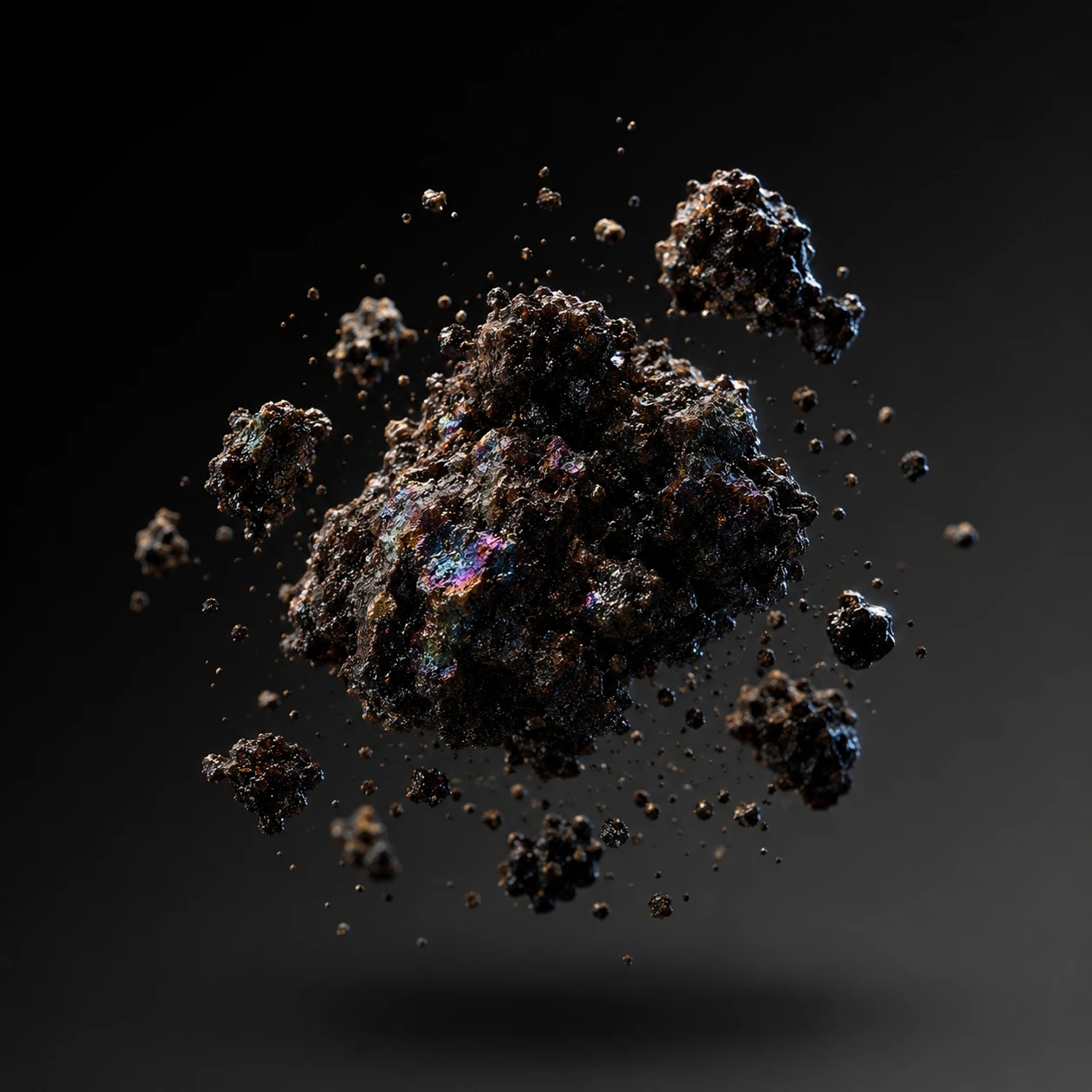
At a glance
- Also known as
- Kondensat · Particulate Phase
- CAS number
- —
- Toxicity
Very high
- Carcinogenic
- Yes — IARC Group 1
- In cigarette smoke
- 1-15 mg per cigarette (ISO 3308, varies by brand)
What is Tar?
Tar isn't a single substance — it's a collective term for the solid combustion residues in cigarette smoke, a viscous mixture of several thousand compounds. What's listed as „tar“ on the pack is the dry residue that remains on a filter in the standardised smoke test (ISO 3308). Each cigarette delivers between 1 and 15 milligrams of tar, depending on brand.
Why is Tar in cigarettes?
Incomplete combustion of tobacco produces a complex mixture of phenols, aromatics, aldehydes and heavy-metal compounds that condense in the lung as a fine particle mist. These particles stick there, are only partially coughed out, and accumulate over years. The ISO standard value on the pack underestimates actual intake — real smokers inhale deeper and take in 2 to 3 times more tar than the test measures.
What Tar does to your body — short term
Short-term you barely notice tar directly — it doesn't irritate acutely like formaldehyde or acrolein. Instead, after each puff it deposits in the bronchial mucosa and clogs the cilia — those microscopic hairs that normally transport debris up out of the lung. This impairment is exactly why smokers get the classic morning cough — the cilia trying to clear overnight residue.
What Tar does long term
Over years, tar deposits visibly change lung tissue — pathologists immediately recognise smokers' lungs by the dark colouration. Tar components are carcinogenic via multiple pathways, with benzo[a]pyrene as the indicator substance. The result: dramatically elevated risk of lung cancer, chronic obstructive bronchitis (COPD), and emphysema. The WHO classifies tobacco smoke as a whole as a Group 1 carcinogen — tar is the largest substantial contributor.
Where else do you know Tar from?
Tar is what you know as the viscous substance in road construction — bitumen, which makes fresh asphalt black. Coal tar was once prescribed for psoriasis and is today EU-restricted in cosmetic products because of its high cancer risk. What you wouldn't put on your skin, you're inhaling into your lung.
How it compares
For tar as a mixture, there's no single workplace exposure limit — its complexity prevents one. Instead its main components are individually strictly regulated, e.g. benzo[a]pyrene at 0.0007 mg/m³. Concentrations in cigarette smoke exceed these values by orders of magnitude.
Workplace exposure limit: kein Einzel-Grenzwert (komplexes Gemisch)
Related substances
These substances you want out of your body.
Flamy walks you through quitting, step by step.
Download the Flamy app