Ammonium Phosphate
Sounds like fertiliser — actually an addiction enhancer in cigarette paper.
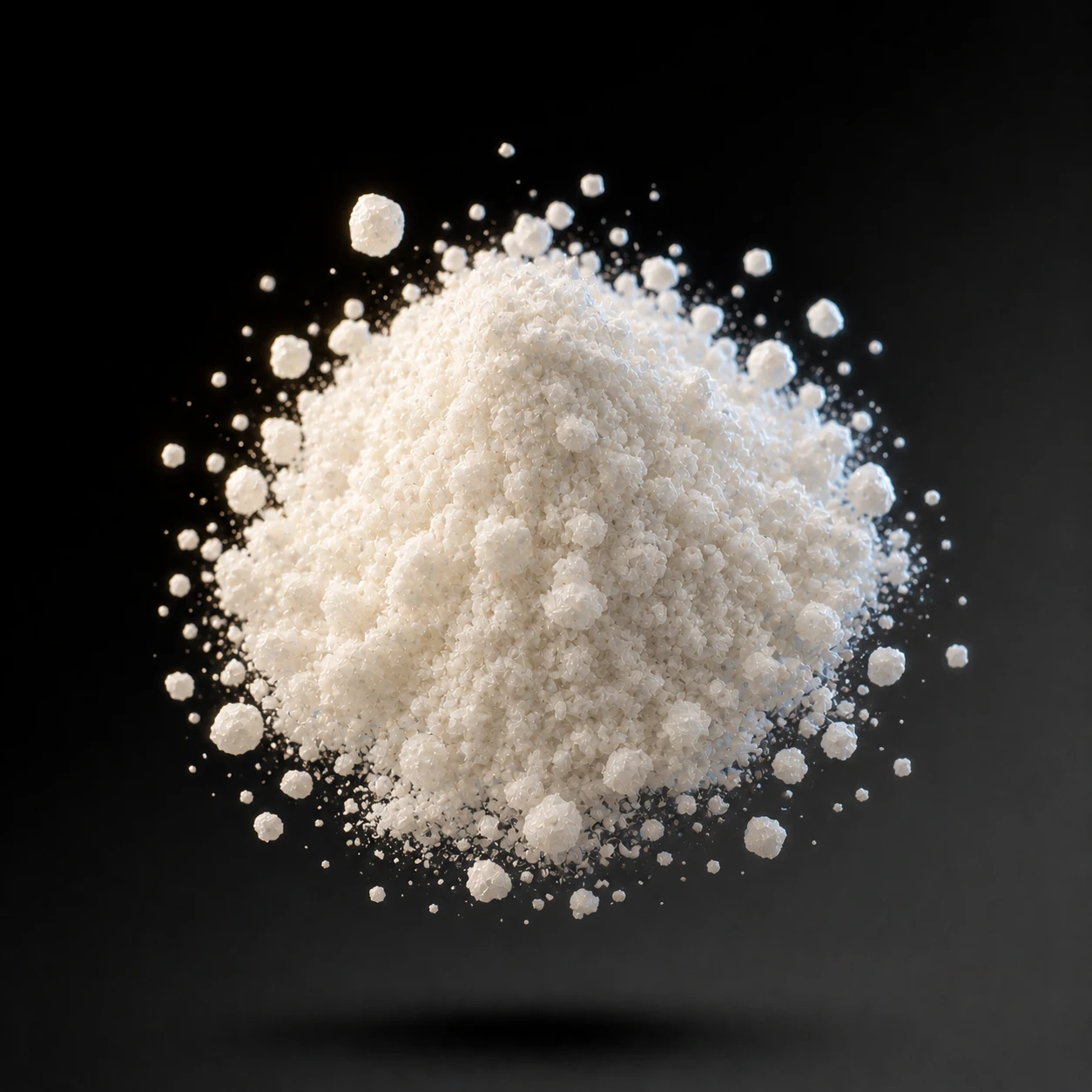
⚠ Sounds harmless — it isn't
Klingt nach Dünger und ist es auch — wird in Zigarettenpapier eingearbeitet, um beim Verbrennen Ammoniak freizusetzen und damit Nikotin pH-bedingt schneller resorbierbar zu machen (Free-Basing).
At a glance
- Also known as
- Diammoniumphosphat · DAP · (NH₄)₂HPO₄
- CAS number
- 7783-28-0
- Toxicity
Low
- Carcinogenic
- Not classified for cancer
- In cigarette smoke
- added to paper/tobacco; releases ammonia upon combustion
What is Ammonium Phosphate?
Diammonium phosphate (DAP, (NH₄)₂HPO₄) is an inorganic salt and known industrially primarily as a nitrogen-phosphate fertiliser. It also finds use as a flame retardant, food additive (E342), and in cigarette manufacturing as paper or tobacco treatment.
Why is Ammonium Phosphate in cigarettes?
Diammonium phosphate is one of the most important free-basing additives in modern cigarettes. Embedded in cigarette paper or directly in tobacco, it releases ammonia upon combustion and shifts the pH of the smoke into the alkaline range. This pH shift converts nicotine into its free base — and free-base nicotine is absorbed in the lung faster and more completely than the salt form. Brown & Williamson documents from the 1990s prove this technology was developed specifically to enhance addictive effect.
What Ammonium Phosphate does to your body — short term
Diammonium phosphate itself is fully decomposed during smoking to ammonia and smaller fragments. Acute effects come from the released ammonia — see our „Ammonia“ entry. The main acute effect isn't irritation but indirect: faster nicotine absorption, earlier addictive effect, shorter intervals between cigarettes.
What Ammonium Phosphate does long term
The long-term effect of diammonium phosphate in the tobacco context is the maintenance and deepening of nicotine addiction. Studies of cigarette brands with and without pH-elevating additives show different addiction-binding profiles in consumers — higher daily quantities, shorter quit intervals, more frequent relapses. The substance itself is toxicologically of low concern — its function makes it problematic.
Where else do you know Ammonium Phosphate from?
Diammonium phosphate is the world's most widespread mineral nitrogen-phosphate fertiliser. As a flame retardant, it's used to impregnate theatre sets, paper and wood. In the food industry (E342) it serves as an acidity regulator and yeast nutrient for bread and wine fermentation. Consumers know it at most from the bag label.
How it compares
Germany's workplace exposure limit for diammonium phosphate as inhalable dust is 10 mg/m³ (AGW TRGS 900) — a high value, because the substance is acutely low in toxicity. The toxicological significance in the cigarette isn't the substance itself but the addiction optimisation it enables.
Workplace exposure limit: 10 mg/m³ (einatembare Stäube, AGW TRGS 900)
Related substances
These substances you want out of your body.
Flamy walks you through quitting, step by step.
Download the Flamy app